

What if the gemstone you bought with so much hope turns out to be nothing more than coloured glass?
For anyone seeking the blessings of Jupiter (Guru) through a Yellow Sapphire (Pukhraj), this thought can be heartbreaking. In India, where astrology is deeply rooted in tradition, gemstones are more than ornaments—they are spiritual investments. Unfortunately, the gemstone market is also filled with imitations, from synthetic lab-grown stones to ordinary yellow glass sold as genuine Pukhraj.
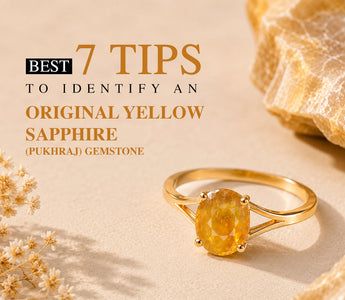
Whether you're purchasing your first gemstone or upgrading to a higher-quality stone, knowing how to identify an original yellow sapphire can save you from disappointment and financial loss. You don't need to be a gemologist—you need to know these seven practical checks.
7 Ways to Identify an Original Yellow Sapphire (Pukhraj)
1. Look for Natural Inclusions
Nature is rarely perfect. A natural Yellow Sapphire forms deep inside the earth over millions of years, leaving behind tiny natural characteristics known as inclusions. These may appear as delicate feathers, silk-like fibres, or liquid veils inside the gemstone.
If the stone appears perfectly flawless under a 10x jeweller's loupe, be cautious. While exceptional stones exist, a completely crystal-clear gemstone may indicate synthetic material or coloured glass. Authentic Pukhraj usually contains subtle internal features that confirm its natural origin.
2. Check for Tiny Air Bubbles (Real vs Fake Pukhraj)
One of the simplest ways to distinguish real vs fake Pukhraj is by inspecting the stone under bright light.
If you notice perfectly round air bubbles trapped inside, the stone is most likely glass. Air bubbles are created during glass manufacturing and are not found in natural Yellow Sapphires. Natural inclusions appear irregular rather than perfectly circular.
3. Perform a Hardness Check
Yellow Sapphire ranks 9 on the Mohs Hardness Scale, making it one of the hardest natural gemstones after Diamond.
Because of this exceptional hardness, an original Pukhraj should resist scratches from common materials such as coins or glass. If the stone develops scratches easily during normal wear, it could be Yellow Topaz, Citrine, or coloured glass rather than a genuine Yellow Sapphire.
Avoid deliberately scratching your gemstone, as improper testing may damage the stone or its setting. Always consult a qualified gemologist if you have doubts.
4. Examine the Facets and Edges
Look closely at the gemstone's facets where each cut meets another.
A genuine Yellow Sapphire has sharp, clean, and well-defined edges because of its hardness. Softer imitation materials such as glass or plastic usually have rounded or slightly worn-looking facet edges.
Well-polished, crisp facets are a good indicator of quality craftsmanship and authentic sapphire material.
5. Observe the Colour Distribution
Natural Yellow Sapphires display a rich golden to canary-yellow appearance, with colour naturally integrated throughout the crystal.
If the colour appears concentrated only along cracks or edges, or if it looks unusually bright, fluorescent, or artificial, the stone may have been dyed or heavily treated.
Natural Pukhraj exhibits a warm, balanced glow rather than an overly vivid yellow.
6. Feel the Temperature
Natural gemstones conduct heat differently from glass or plastic.
An authentic Yellow Sapphire generally feels cool when first touched and retains that coolness for a short time. Glass and plastic tend to warm more quickly in your hand.
Although this isn't a definitive identification method on its own, it can provide an additional clue when combined with other observations.
7. Always Ask for a Laboratory Certificate
The safest and most reliable way to identify an original Yellow Sapphire is through certification from a recognised gemological laboratory.
A genuine laboratory report should clearly mention:
- Whether the gemstone is Natural or Synthetic
- Any treatments, including heating or fracture filling
- Carat weight
- Dimensions
- Species and variety
- Origin (where available)
Certificates from reputed laboratories such as IGI, GRS, GII, or recognised government-approved gemological laboratories provide greater confidence in your purchase.
If a seller refuses to provide a certificate or avoids your questions, consider it a significant warning sign.
Final Thoughts
A Yellow Sapphire is far more than a beautiful gemstone—it represents faith, prosperity, wisdom, and the blessings of Jupiter according to Vedic astrology.
Buying a fake Pukhraj isn't only a financial loss; it can also undermine the confidence and purpose with which you chose the gemstone.
Fortunately, identifying an authentic Yellow Sapphire becomes much easier when you know what to look for. By checking natural inclusions, hardness, facet quality, colour, temperature, and most importantly, a trusted laboratory certificate, you can make an informed decision with confidence.
At World of Oorja, every Yellow Sapphire is carefully selected, independently certified, and quality-checked before reaching you so that you can wear your gemstone with complete peace of mind.
Explore our collection of natural, lab-certified Yellow Sapphire (Pukhraj) gemstones and choose the one that's right for you.
Frequently Asked Questions
How can I tell if a Yellow Sapphire is real?
A genuine Yellow Sapphire usually contains natural inclusions, has sharp facet edges, resists scratches because of its high hardness, feels cool to the touch, and comes with an authentic laboratory certificate from a recognised gemological laboratory.
Does real Pukhraj scratch easily?
No. Yellow Sapphire has a hardness of 9 on the Mohs scale, making it highly resistant to scratches during normal wear. However, avoid intentionally performing scratch tests, as improper handling may damage the gemstone or its setting.
Is a lab certificate necessary for Pukhraj?
Yes. A laboratory certificate is one of the most reliable ways to verify whether a Yellow Sapphire is natural, synthetic, treated, or untreated. Always buy certified gemstones from trusted sellers.
What is the difference between real and fake Pukhraj?
Real Pukhraj forms naturally over millions of years and usually contains natural inclusions. Fake Pukhraj may be made from coloured glass, synthetic materials, or treated stones and often lacks the natural characteristics found in genuine Yellow Sapphire.
Where should I buy a certified Yellow Sapphire?
Purchase only from reputable gemstone sellers that provide independent laboratory certification, transparent pricing, and detailed information about the gemstone's quality and treatments.
Related Reading
Recommended article: Yellow Sapphire (Pukhraj) Benefits: Who Should Wear It According to Astrology?
This guide explains the astrological benefits of Yellow Sapphire, who should wear Pukhraj, and how to choose the right gemstone based on your horoscope.








:%207%20Tips)