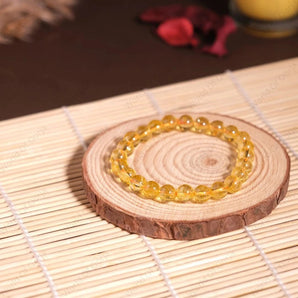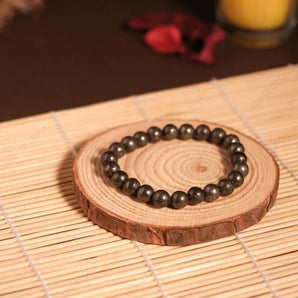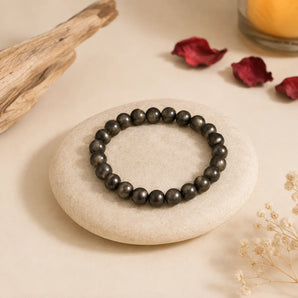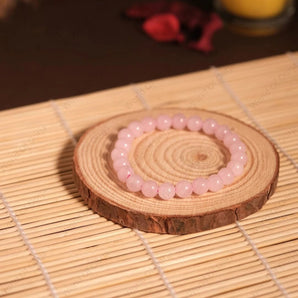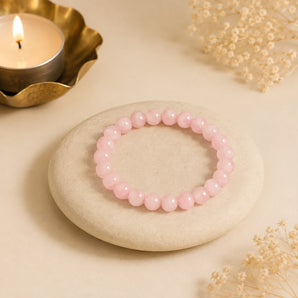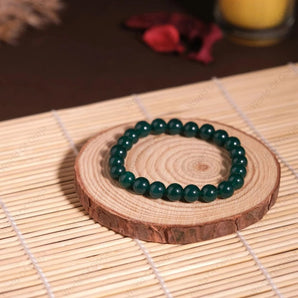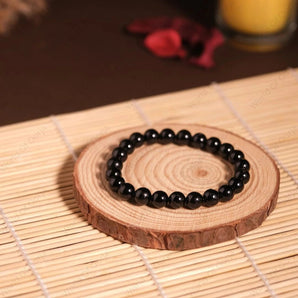

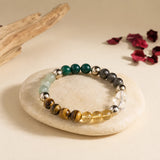

People wear a Devadaru malai for a calmer mind and steadier focus in prayer, and because the wood is closely tied to Lord Shiva. Those benefits are devotional. No study shows that wearing Devadaru beads treats any illness, so we don't claim it does.
Many articles on Devadaru mix three things together: Hindu tradition, Ayurvedic uses of deodar oil, and health claims with nothing behind them. This guide keeps them apart.
What tradition says
Devadaru is Sanskrit for "wood of the gods", and the tree has been sacred in the Himalayas for a very long time. Puranic stories tell of Daruvana, the forest where Shiva appeared among the sages, and the name is usually read as a forest of deodar. Many Himalayan Shiva temples still stand in deodar groves; the Jageshwar temples in Uttarakhand are one example. The tree also appears in the Ramayana, where Sugriva sends search parties through Devadaru forests to look for Sita.
As a japa mala, Devadaru is used the same way as rudraksha or tulsi, one bead per mantra. The beads are light, so a long session stays comfortable, and a 54-bead mala completes 108 in two rounds.
People who wear one daily often call it a steadying habit on busy days. The faint cedar smell plays a part, since a familiar scent can become your cue to settle into prayer. We think of the mala as a reminder to slow down. It won't remove stress on its own.
Customs some families follow
Sellers and temple traditions add a few rules for wearing Devadaru. They vary by family and region, so treat them as customs you can choose to follow:
-
Take it off before sleep and keep it in the puja room.
-
Don't wear it on days you eat non-vegetarian food. Some say to wait 12 hours after such a meal.
-
Some women take it off during their periods.
-
Wear it in a calm frame of mind, and set it aside during anger or mourning.
What Ayurveda says, and why it doesn't carry over to a mala
Ayurveda uses deodar wood and its oil in preparations for joint pain, inflammation and skin conditions. Lab studies have tested the wood oil for anti-inflammatory activity and the needle oil for antimicrobial activity.
Those uses involve oils, extracts and decoctions that a practitioner prepares and doses. A polished bead around your neck delivers none of that. When a mala is sold as a remedy for arthritis, anxiety or weak immunity, the seller is borrowing a claim from Ayurvedic medicine.
Claims you'll see online, checked
|
Claim |
What we actually know |
|---|---|
|
Soothes anxiety and reduces stress |
The scent may help you settle during prayer. Nothing shows that wearing it treats anxiety |
|
Reduces inflammation or joint pain |
Ayurveda uses deodar oil and extracts for this. A worn bead is not a dose of anything |
|
Cleanses toxins and supports immunity |
No evidence |
|
Has "documented antimicrobial properties" |
Deodar oils have been tested in the lab. A finished bead hasn't |
|
Guarantees money, a job or protection |
No object can guarantee outcomes. It can remind you of an intention |
If you're managing a health condition, wear the mala as part of your practice and keep your treatment with your doctor.
Who it suits
- Anyone who wants a light, everyday mala for japa or meditation.
- Shiva devotees and people drawn to the Himalayas.
- People who find heavy or dark beads uncomfortable to wear all day.
- Someone starting japa for the first time.
If you want a mala mainly for protection rather than calm, Karungali (ebony) is the usual choice. See Karungali mala benefits, use and spiritual significance, or compare the two in Karungali vs Devadaru.
How to wear and care for it
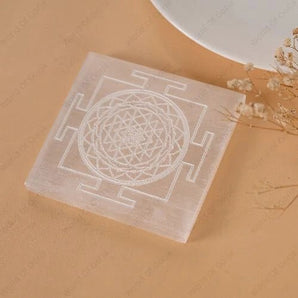
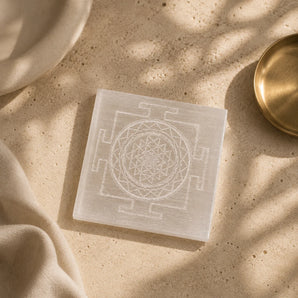
Most people wear it around the neck every day. For japa, move one bead at a time with your thumb, one mantra per bead. Take it off before bathing, keep perfume away from i,t and store it in its pouch. Many people rest it on a selenite plate or under moonlight once a month.
FAQs
What is the main benefit of a Devadaru mala?
In tradition, a calmer mind and steadier focus in prayer, with a strong link to Lord Shiva.
Can I wear Devadaru with Rudraksha?
Yes. Both are linked with Shiv, and many people wear them together, usually as two separate malas.
Can I wear it while sleeping?
Many families take it off at night and keep it in the puja room. That's a custom rather than a rule, so follow your family's practice.
Is Devadaru good for health?
Ayurveda uses deodar wood and oil as medicine.
Before you buy, read how to check if a Devadaru mala is original. Comparing options? See Karungali vs Devadaru. Shop the Gold Plated Devadaru Mala (₹899).