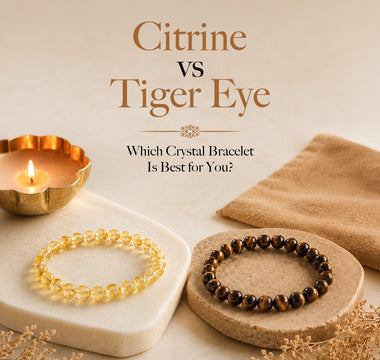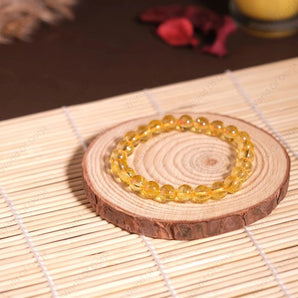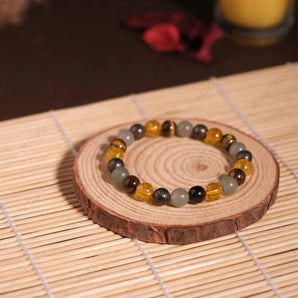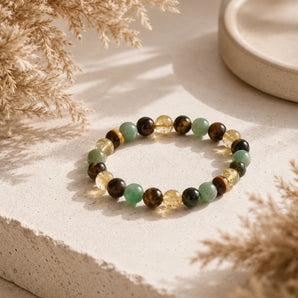


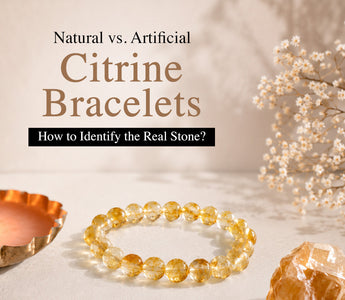
Citrine's warm golden glow has made it one of the most loved gemstones among crystal enthusiasts and jewellery lovers alike. In India, many people wear citrine bracelets not only for their elegant appearance but also for their association with prosperity, confidence, abundance, and positive energy.
However, as the popularity of citrine has grown, so has the number of heat-treated, synthetic, and imitation stones available in the market. Many buyers unknowingly purchase treated amethyst or coloured glass believing it to be natural citrine.
If you're wondering how to identify real citrine, this guide explains the key differences between natural and artificial citrine, helping you choose an authentic bracelet with confidence.
Why Choose a Natural Citrine Bracelet?
Citrine is much more than a decorative gemstone. In crystal healing traditions, it is often associated with:
- Confidence and personal growth
- Prosperity and abundance
- Emotional balance
- Positive energy
- Creativity and motivation
Its warm golden colour also complements a wide range of skin tones, making it an ideal everyday bracelet.
What Makes Natural Citrine Special?
Natural citrine is relatively rare and is primarily sourced from countries such as Brazil, Madagascar, Bolivia, and parts of Africa.
Unlike treated stones, natural citrine forms within the earth over millions of years, giving it unique colour patterns and natural inclusions.
Natural citrine typically features:
- Soft yellow to golden honey shades
- Even yet naturally varied colour distribution
- Gentle colour gradients
- Occasional smoky zones
- Natural internal inclusions
These characteristics make every genuine citrine unique.
Artificial or Heat-Treated Citrine: What Should You Know?
Because natural citrine is relatively uncommon, many stones sold as citrine are actually heat-treated amethyst or smoky quartz.
These gemstones are exposed to high temperatures to produce a yellow or orange appearance.
Although heat-treated citrine remains a genuine quartz gemstone, it differs from naturally occurring citrine in both appearance and origin. Buyers seeking natural gemstones should understand this distinction before purchasing.
Artificial or treated citrine often displays:
- Deep amber or burnt orange colour
- Strong reddish tones
- Glass-like clarity
- Very uniform colouring
- Few or no natural inclusions
Natural vs Artificial Citrine Comparison
| Feature | Natural Citrine | Artificial / Heat-Treated Citrine |
|---|---|---|
| Colour | Soft golden yellow with natural variation | Bright orange, amber or reddish-yellow |
| Inclusions | Natural internal features | Often cleaner or glass-like |
| Availability | Rare | Common |
| Formation | Naturally formed over millions of years | Heat-treated from Amethyst or Smoky Quartz |
| Value | Higher | Usually lower |
How to Identify a Real Citrine Bracelet
Buying a citrine bracelet isn't only about appearance—it's about authenticity, quality, and choosing a gemstone that matches your purpose.
1. Check the Colour
Natural citrine usually displays warm honey-yellow or pale golden tones.
If the bracelet appears bright orange, deep amber, or fluorescent yellow, it may be heat-treated or artificially coloured.
Natural stones rarely display an intense burnt-orange appearance.
2. Look for Natural Inclusions
Every natural gemstone develops small internal characteristics during formation.
Tiny inclusions, feather-like patterns, or subtle colour variations are perfectly normal.
If every bead looks perfectly clear and identical, the bracelet could be synthetic or manufactured from glass.
3. Test the Hardness
Citrine has a hardness of 7 on the Mohs scale, making it relatively resistant to scratches during normal wear.
Avoid intentionally scratching the gemstone to test it. Instead, inspect the surface for excessive wear or damage that may indicate lower-quality imitation materials.
4. Feel the Temperature
Natural gemstones generally feel cool when first touched and gradually warm to your body temperature.
Glass or plastic imitations often feel warmer immediately.
Although this isn't a definitive test by itself, it provides another useful clue when combined with the other identification methods.
5. Always Ask for Certification
One of the most reliable ways to verify authenticity is by purchasing certified genuine citrine bracelets from trusted sellers.
Always request a gemstone authenticity certificate from a reputable seller before purchasing.
At World of Oorja, every genuine citrine bracelet is carefully sourced, quality checked, and supplied with authenticity documentation so you can shop with complete confidence.
6. Compare the Price with Market Value
Natural citrine is relatively rare compared to treated alternatives.
If a bracelet is being sold at an unusually low price while claiming to be completely natural, it deserves extra scrutiny.
Choosing authenticity over discounts often saves money in the long run.
Why Buy Genuine Citrine Bracelets from World of Oorja?
Buying from a trusted gemstone brand significantly reduces the risk of receiving synthetic or heavily treated stones.
World of Oorja offers:
- Carefully sourced natural gemstones
- Certified authenticity
- Quality-tested bracelets
- Ethical sourcing
- Expert customer guidance
- Secure online shopping
Browse our collection of genuine citrine bracelets to find a bracelet that combines beauty, authenticity, and positive energy.
Final Thoughts
Choosing a genuine citrine bracelet is about much more than appearance.
By understanding colour, inclusions, hardness, temperature, certification, and pricing, you can confidently distinguish real vs fake citrine before making a purchase.
When you invest in a natural gemstone from a trusted source, you gain not only a beautiful accessory but also the confidence that you're wearing an authentic crystal.
At World of Oorja, every bracelet is selected with care so you can enjoy both lasting beauty and complete peace of mind.
Frequently Asked Questions
How can I identify real citrine?
Natural citrine usually displays soft golden-yellow tones, contains subtle natural inclusions, feels cool to the touch, has a Mohs hardness of 7, and is supplied with an authenticity certificate from a trusted seller.
Is heat-treated citrine real citrine?
Heat-treated citrine is still a natural quartz gemstone, but it is not naturally occurring citrine. It begins as amethyst or smoky quartz and changes colour through heat treatment.
Does real citrine scratch easily?
No. Citrine has a Mohs hardness of 7, making it suitable for everyday jewellery. However, it should still be protected from rough impacts and harder gemstones.
Why is natural citrine more expensive?
Natural citrine is significantly rarer than heat-treated alternatives, making it more valuable and desirable among collectors and gemstone enthusiasts.
Should I always buy certified citrine?
Yes. Buying certified gemstones from reputable sellers helps ensure authenticity and provides greater confidence in your purchase.