
Navratri guides usually tell you what to wear, what to eat, and which Goddess is worshipped each day. But there is another way to make the nine-day journey more personal: choosing a crystal that reflects the intention you want to carry through each day.
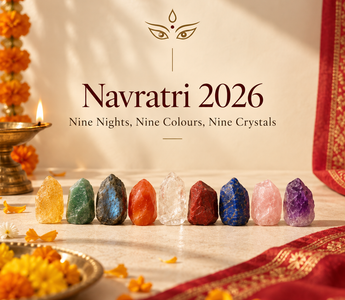
Shardiya Navratri 2026 begins on Sunday, October 11, and continues through Monday, October 19. Each day is associated with one of the nine forms of Goddess Durga and a traditional colour. The colours for 2026 are Orange, White, Red, Royal Blue, Yellow, Green, Grey, Purple and Peacock Green.
Crystals aren't a required part of Navratri worship, and their metaphysical properties aren't scientifically established. However, many people who practise crystal traditions use particular stones as symbols of intention, meditation and spiritual focus.
So if you're looking to combine your Navratri practice with crystals, here's a day-by-day guide to nine colours, nine forms of the Goddess and nine crystal pairings.
Navratri 2026: Nine Colours and Crystal Guide
| Day | Date | Goddess | Colour | Suggested Crystal |
|---|---|---|---|---|
| Day 1 | October 11 | Shailaputri | Orange | Carnelian |
| Day 2 | October 12 | Brahmacharini | White | Clear Quartz (Sphatik) |
| Day 3 | October 13 | Chandraghanta | Red | Red Jasper |
| Day 4 | October 14 | Kushmanda | Royal Blue | Lapis Lazuli |
| Day 5 | October 15 | Skandamata | Yellow | Citrine |
| Day 6 | October 16 | Katyayani | Green | Green Aventurine |
| Day 7 | October 17 | Kalaratri | Grey | Black Tourmaline |
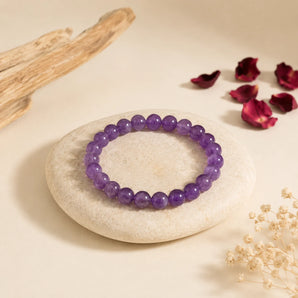
| Day 8 | October 18 | Mahagauri | Purple | Amethyst |
| Day 9 | October 19 | Siddhidatri | Peacock Green | Malachite |
The nine colours are based on the 2026 Navratri colour calendar, which follows the weekday on which Navratri begins.
Day 1 — October 11: Orange — Shailaputri
Crystal match: Carnelian
Navratri begins with Maa Shailaputri, the first form of Navdurga. Orange is the colour associated with Day 1 in 2026 and is traditionally connected with warmth, enthusiasm, and positive energy.
Carnelian is a natural fit for this theme.
In crystal traditions, Carnelian is commonly associated with vitality, motivation, courage and grounding. Its warm orange-red appearance also complements the colour of the day beautifully.
If you're beginning Navratri with a personal intention—starting a new habit, committing to a spiritual practice or simply approaching the festival with greater focus—Carnelian can serve as a physical reminder of that intention.
How to use it:
Wear a Carnelian bracelet during the day or keep the stone near your puja space while setting your intention.
Day 2 — October 12: White — Brahmacharini
Crystal match: Clear Quartz (Sphatik)
Day 2 is dedicated to Maa Brahmacharini, and the colour for 2026 is white. White is traditionally associated with purity, peace, and a sense of calm.
Clear Quartz, also known as Sphatik in many Indian spiritual contexts, is one of the most recognisable crystals used in meditation and spiritual practices.
Crystal practitioners often associate Clear Quartz with clarity, focus and intention-setting.
That makes it a natural symbolic companion for a day centred around discipline, devotion and inner focus.
How to use it:
Hold the crystal quietly during meditation or prayer and use the time to establish one clear intention for the day.
If you're purchasing a Sphatik or Clear Quartz bracelet, pay attention to the product description, stone authenticity and any available certification.
Day 3 — October 13: Red — Chandraghanta
Crystal match: Red Jasper
Day 3 honours Maa Chandraghanta and carries the colour red in the 2026 Navratri colour cycle. Red is traditionally associated with passion, vitality and strength.
Red Jasper complements this symbolism with its deep earthy-red appearance.
In crystal traditions, Red Jasper is associated with stability, endurance, grounding and resilience. Rather than thinking of it as a source of supernatural power, you can use it as a physical reminder to stay steady when facing something difficult.
Pairing a Red Jasper bracelet with your red Navratri outfit also creates a simple visual connection between the festival's colour theme and your personal intention.
How to use it:
Keep the stone with you during your morning prayer or meditation and focus on one quality you want to strengthen—such as patience, courage or perseverance.
Day 4 — October 14: Royal Blue — Kushmanda
Crystal match: Lapis Lazuli
Day 4 is dedicated to Maa Kushmanda, and the 2026 colour is Royal Blue. The colour is traditionally associated with richness, tranquillity and elegance.
Lapis Lazuli has a long history of use as a decorative and symbolic stone across different cultures. In modern crystal traditions, it is commonly associated with wisdom, communication, self-awareness and spiritual reflection.
Its deep blue colour makes it a particularly natural pairing with the Royal Blue theme.
If you're using Navratri as a time to reflect, journal or spend more time in prayer, Lapis Lazuli can become a symbolic object that helps you return to that intention.
How to use it:
Place a Lapis Lazuli stone or bracelet beside your meditation space while you pray or journal.
When buying Lapis Lazuli, look carefully at the stone description and origin information. Natural lapis can vary significantly in colour, pattern and quality.
Day 5 — October 15: Yellow — Skandamata
Crystal match: Citrine
Day 5 honours Maa Skandamata, and yellow is the colour for 2026. Yellow is associated with optimism, warmth and joy.
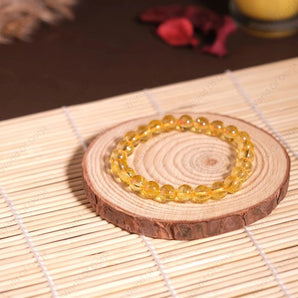
Citrine is often called the stone of abundance in crystal traditions and is commonly associated with optimism, confidence, prosperity and positive intention.
Its bright golden appearance also makes it an obvious match for the yellow theme of Day 5.
Rather than viewing the crystal as something that guarantees wealth or success, think of it as a reminder of the mindset you want to cultivate—gratitude, optimism, generosity or confidence.
How to use it:
Keep Citrine near your puja space or wear it as a bracelet while focusing on gratitude and the things you want to nurture in your life.
Day 6 — October 16: Green — Katyayani
Crystal match: Green Aventurine
Day 6 is dedicated to Maa Katyayani, and the colour associated with the day is green. Green traditionally evokes ideas of nature, growth, peace and new beginnings.
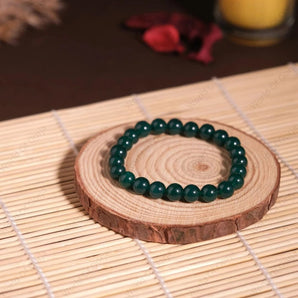
Green Aventurine is commonly associated with growth, opportunity, emotional balance, and heart-centred intentions in crystal traditions.
That makes it a fitting companion for a day themed around growth and balance.
You could use Green Aventurine to represent a personal area where you want to grow—whether that's a relationship, career goal, creative project or spiritual practice.
How to use it:
Carry the stone during the day or wear a Green Aventurine bracelet while reflecting on one area of your life where you want to encourage positive change.
Day 7 — October 17: Grey — Kalaratri
Crystal match: Black Tourmaline
Day 7 is associated with Maa Kalaratri, and the 2026 colour is grey. Grey represents balance and groundedness in the traditional colour associations for this Navratri cycle.
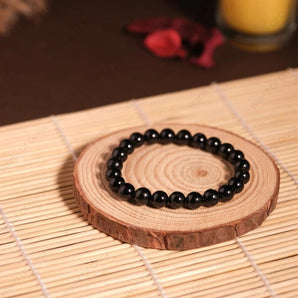
Black Tourmaline is one of the most popular stones in modern crystal practices focused on protection, grounding and energetic boundaries.
You will often hear claims that Black Tourmaline literally absorbs or removes negative energy. Those are metaphysical beliefs rather than scientifically established effects.
A more useful way to approach the stone is as a symbolic reminder to step back from unnecessary negativity and create healthier boundaries.
How to use it:
Keep Black Tourmaline near your entrance, meditation area or workspace, or wear it during your Day 7 prayers as a reminder to stay grounded.
Day 8 — October 18: Purple — Mahagauri
Crystal match: Amethyst
Day 8 is dedicated to Maa Mahagauri, with purple as the colour for 2026. Purple is traditionally associated with grandeur, richness and spiritual symbolism.
Amethyst is one of the most widely recognised crystals used in meditation and spiritual practices.
Crystal traditions commonly associate Amethyst with calm, reflection, intuition and spiritual awareness.
That makes it a natural pairing for a day when many people may want to slow down, reflect and turn their attention inward.
How to use it:
Hold an Amethyst during meditation or keep it beside your prayer space. Use those few minutes to disconnect from distractions and focus on your intention.
Day 9 — October 19: Peacock Green — Siddhidatri
Crystal match: Malachite
The ninth day is associated with Maa Siddhidatri, and the 2026 colour is Peacock Green. The colour is associated with individuality, freshness and the combined qualities of blue and green.
Malachite is often associated with transformation, growth and personal change in crystal traditions.
Its striking green patterns make it especially appropriate for the final day of the nine-day colour journey.
You can use Malachite symbolically to represent the changes you want to carry forward after Navratri—not as a guarantee that the stone itself will create those changes.
How to use it:
During your final-day prayer or reflection, hold the stone and think about one habit, mindset or pattern you want to leave behind and one you want to develop.
How to Use Crystals During Navratri
You don't need nine different crystals to participate.
In fact, choosing one or two stones that genuinely resonate with you may be more meaningful than collecting all nine simply for the sake of completing the set.
You can use crystals in several simple ways:
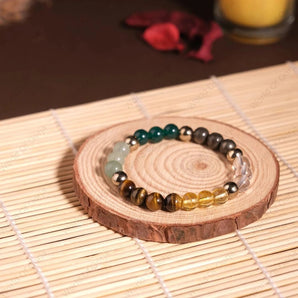
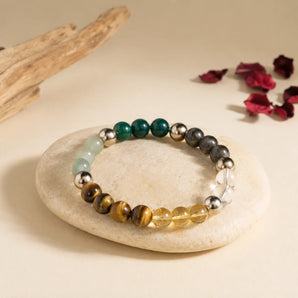
Wear a Crystal Bracelet
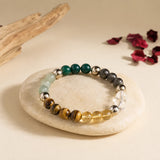
A bracelet allows you to keep your chosen stone with you throughout the day. You can select the crystal based on the day's colour or the personal intention you're working with.
Keep a Crystal in Your Puja Space
Place the stone beside—not necessarily inside—your puja setup as a visual reminder of your intention.
Use It During Meditation
Hold the crystal quietly while you meditate, pray or practise deep breathing.
Carry It With You
A small tumbled stone can be kept in a pouch or pocket as a personal reminder throughout the day.
The important part isn't how many crystals you own. It's the intention you attach to your practice.
Should You Cleanse Your Crystals Before Navratri?
Many crystal practitioners choose to cleanse their stones before using them for a new spiritual practice.
There are several traditions for doing this, including:
- Keeping certain stones in moonlight
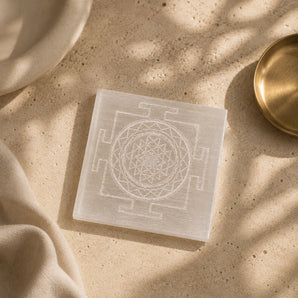
- Using a Selenite plate
- Using other traditional cleansing practices appropriate for the particular stone
However, not every crystal responds well to water, direct sunlight, or other cleansing methods. Some minerals can be damaged, fade, or become unstable when exposed to moisture or prolonged sunlight.
So if you're cleansing a crystal, check the care requirements of that specific stone first.
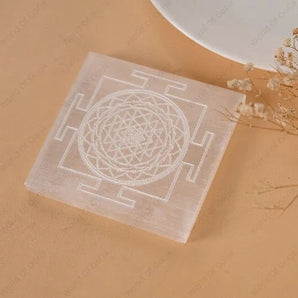
A Selenite plate is also a popular choice among crystal practitioners because it provides a simple, dry method of keeping stones together during their routine.
For those who enjoy sacred symbolism, Selenite plates featuring designs such as the Shree Yantra can add another visual element to a meditation or puja space.
Do You Need a Crystal for Every Navratri Day?
No.
Crystals are not a requirement for Navratri worship.
The heart of Navratri remains devotion, prayer, reflection, and the worship of the nine forms of Goddess Durga.
If crystals are already part of your spiritual practice, they can be incorporated as personal symbols of intention.
You might choose:
- Carnelian for a new beginning
- Clear Quartz for clarity
- Red Jasper for steadiness
- Lapis Lazuli for reflection
- Citrine for optimism and abundance symbolism
- Green Aventurine for growth
- Black Tourmaline for grounding
- Amethyst for meditation
- Malachite for transformation
You can also choose a crystal based on the colour you are wearing that day rather than trying to follow all nine pairings.
How to Choose a Crystal for Navratri
If you're buying a crystal specifically for Navratri, don't choose solely because a particular stone is trending.
Consider these factors instead:
1. Choose Your Intention
What do you want to focus on during the festival?
Peace? Discipline? Courage? Growth? Reflection?
Start there.
2. Look at the Stone's Authenticity
Natural stones can vary considerably in appearance. Ask the seller for clear product information and, where applicable, certification details.
3. Check the Treatment
Some gemstones and minerals can be dyed, heated or otherwise treated.
If the natural appearance of the stone matters to you, check whether the product description explains any treatments.
4. Consider How You'll Use It
A bracelet, pendant, tumbled stone, and raw specimen serve different practical purposes.
If you want to carry the crystal throughout the day, a bracelet or small polished stone may be more convenient.
5. Buy From a Transparent Seller
Look for clear information about the stone, its specifications, care instructions, and certification where applicable.
Navratri 2026: A More Intentional Nine-Day Practice
The beauty of combining Navratri colours with crystals isn't about creating a complicated ritual.
It's about creating a small daily reminder.
On Day 1, you might focus on beginning.
On Day 3, you might think about courage.
On Day 5, gratitude and abundance.
On Day 7, boundaries and grounding.
And by Day 9, you might reflect on what you want to carry forward after the festival.
The crystal simply becomes a physical symbol of that intention.
That approach also keeps the practice personal. You don't have to believe that a stone has supernatural powers to find meaning in carrying something that reminds you to slow down, pray, reflect or stay focused.
Frequently Asked Questions About Navratri Crystals
What are the Navratri colours for 2026?
The nine Navratri colours for 2026 are Orange, White, Red, Royal Blue, Yellow, Green, Grey, Purple and Peacock Green, from Day 1 through Day 9. Shardiya Navratri 2026 runs from October 11 to October 19.
Which crystal is best for Navratri?
There isn't one universally "best" Navratri crystal. The choice can depend on your personal intention, preferred spiritual practice and the symbolism you connect with.
For example, Carnelian can represent motivation, Amethyst reflection and Black Tourmaline grounding within common crystal traditions.
Can I wear crystals during Navratri?
Yes. If wearing crystals is already part of your personal practice, you can wear a crystal bracelet or other crystal jewellery during Navratri.
There is no requirement to wear crystals as part of Navratri worship.
Can I use one crystal for all nine days?
Absolutely.
You don't need a separate crystal for each day. Choose one stone that has personal meaning to you and use it throughout the nine days as a consistent reminder of your intention.
How should I cleanse crystals before Navratri?
Different crystal traditions use methods such as moonlight or Selenite plates. However, some stones can be damaged by water or prolonged sunlight, so check the care requirements of the specific crystal before choosing a cleansing method.
Are crystal healing properties scientifically proven?
The metaphysical or healing properties commonly attributed to crystals have not been scientifically established. People may nevertheless use crystals as part of meditation, spiritual practice, symbolism or personal reflection.
Can I keep crystals in my puja room?
Many people choose to keep crystals in their meditation or puja spaces as personal spiritual objects. If you do so, keep them clean and follow any care instructions appropriate for the particular stone.
Make Navratri 2026 More Personal
Navratri doesn't need another complicated checklist.
Nine days can simply mean nine opportunities to pause, reflect, and reconnect with what matters to you.
If crystals are part of your spiritual routine, use them as symbols of intention rather than substitutes for prayer or practice.
Choose Carnelian for a fresh start, Clear Quartz for clarity, Citrine for optimism, Amethyst for reflection—or explore the full nine-crystal journey.
If you're looking for natural crystals or crystal bracelets for your Navratri practice, explore the collection at World of Oorja and review the individual product details, stone information, and certification where provided before making your choice.
The most meaningful crystal isn't necessarily the rarest one.
It's the one that reminds you of the intention you chose to carry through the nine nights.