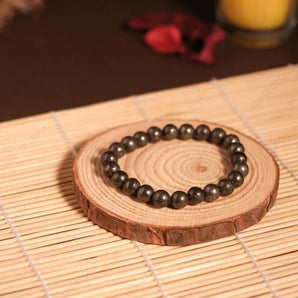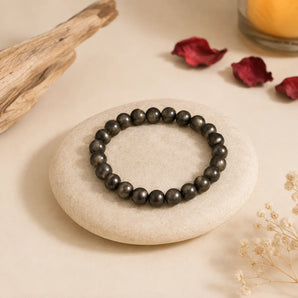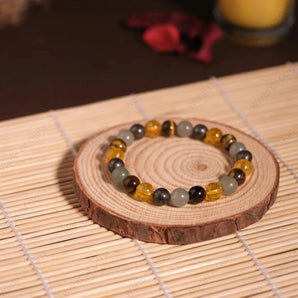


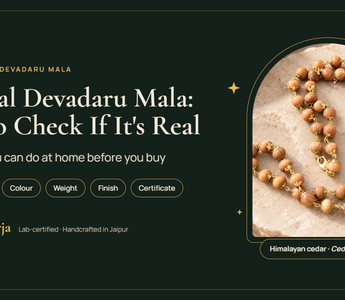
An original Devadaru mala is cut from the heartwood of Cedrus deodara, the Himalayan cedar. You can check one at home in about five minutes. Real Devadaru smells faintly of cedar, shows wood grain, varies a little in colour from bead to bead, and feels light in the hand. It should also come with a certificate that names the material.
Most fakes are a cheaper wood, polished to a cedar colour and sometimes sprayed with cedar oil. The checks below need only your hands, your nose and good light.
What Devadaru is
The name joins the Sanskrit deva (god) and daru (wood), so it means "wood of the gods". The tree grows wild across the western Himalayas, at roughly 1,200 to 3,000 metres in Kashmir, Himachal Pradesh and Uttarakhand. Its heartwood is naturally oily and fragrant, which is why it has been used for temples, incense and prayer beads for centuries
In Tamil, it is usually called Devadaru malai, so you'll see both names when you shop.
Quick answer: 6 signs of an original Devadaru mala
|
Check |
Original Devadaru |
Common fake |
|---|---|---|
|
Smell |
Soft, dry cedar scent, stronger when you rub a bead between your palms |
No smell, or a strong perfume-like smell that fades in days |
|
Grain |
Fine, straight lines visible on most beads |
No grain under a thick lacquer, or a printed-looking pattern |
|
Colour |
Warm honey to light brown, slightly different bead to bead |
Every bead the same shade |
|
Weight |
Light, since deodar is a softwood that floats |
Heavier than expected, or plastic-light with a hollow feel |
|
Finish |
Hand-polished and smooth, with a soft matte sheen |
Glossy, sticky or plasticky coating |
|
Paperwork |
Certificate naming the material, with a report number you can check |
No certificate, or a generic card that doesn't name the wood |
1. Smell it
Smell the mala up close, then rub two beads briskly between your palms for ten seconds and smell again. Deodar heartwood holds natural oils, so warmth and friction should make the scent a little stronger.
A scent you can notice from across the room is a warning sign. Strong, sweet or perfume-like smells usually come from sprayed oil, and they fade within a week or two. Real Devadaru keeps a faint cedar note for months.
2. Look for grain
Take the mala to a window. Genuine beads show fine lines running through the wood, and the lines sit differently on each bead. Your phone's zoom helps. If the surface looks completely uniform, or the coating is too thick to see into the wood, ask the seller about it.
3. Expect the beads to differ
Lay the mala flat. Some beads will be a shade lighter or darker than others, and a few may carry a small knot or streak. Wood is never one even colour, so a set of identical beads usually means moulded or heavily dyed material.
4. Weigh it in your hand
A 54-bead Devadaru mala should feel light around the neck. If one feels as heavy as ebony, it's probably a denser wood stained to look like cedar. If it feels hollow or squeaks, it may be resin.
Skip the water, flame, and fingernail tests. They prove little for wood and can damage a real mala or strip its finish.
5. Check the finish and the caps
A well-made mala is polished by hand rather than dipped in heavy varnish, so it should feel smooth and dry, never tacky. Plated caps and the clasp should sit flush against the beads with no glue marks.
6. Ask for a certificate that names the wood
A certificate helps only if it names the material and carries a report number you can check. A printed card saying "100% original", with no lab name or number, proves nothing. Many listings call their mala "original" in the title and give no certificate or test at all.
The World of Oorja Gold Plated Devadaru Mala (₹899) ships with a certificate that has its own report number and QR code. Each mala is cut and hand-polished in our Jaipur workshop. It has 54 beads of 7 mm, so two rounds give the traditional 108 for japa.
Red flags when buying online
- A price far below the market for a 54- or 108-bead mala of 7 mm or larger.
- The same stock photo used by several sellers.
- No word on what wood it is, or vague labels like "sacred wood beads".
- Claims that the mala cures a disease, removes toxins or guarantees results.
Keeping it looking good
Keep it dry and take it off before bathing or swimming. Keep perfume and oils away from the plated caps, wipe it with a soft, dry cloth, and store it in its pouch. Cedar darkens a little with age and handling, which is normal.
FAQs
Does real Devadaru float in water?
Usually, yes, because deodar is a light softwood. Plenty of cheap woods float too, so rely on smell and grain instead.
Why does my Devadaru mala smell less after a few months?
The natural scent softens over time, and rubbing a bead between your palms usually brings it back. If a mala smelled very strong at first and then of nothing, it was probably sprayed with oil.
Is Devadaru the same as sandalwood?
No. Sandalwood (chandan) comes from a different tree and smells sweeter and creamier. Red sandalwood (rakt chandan) is different again: deep red and much denser.
Can men and women both wear it?
Yes. Both wear Devadaru malas, every day or for japa.
Read next: Devadaru Malai Benefits: What Tradition Says and What It Doesn't and Karungali vs Devadaru: Which Mala Is Right for You? Checking a Karungali mala instead? Ebony behaves differently, so follow our guide on how to test an original Karungali mala.